
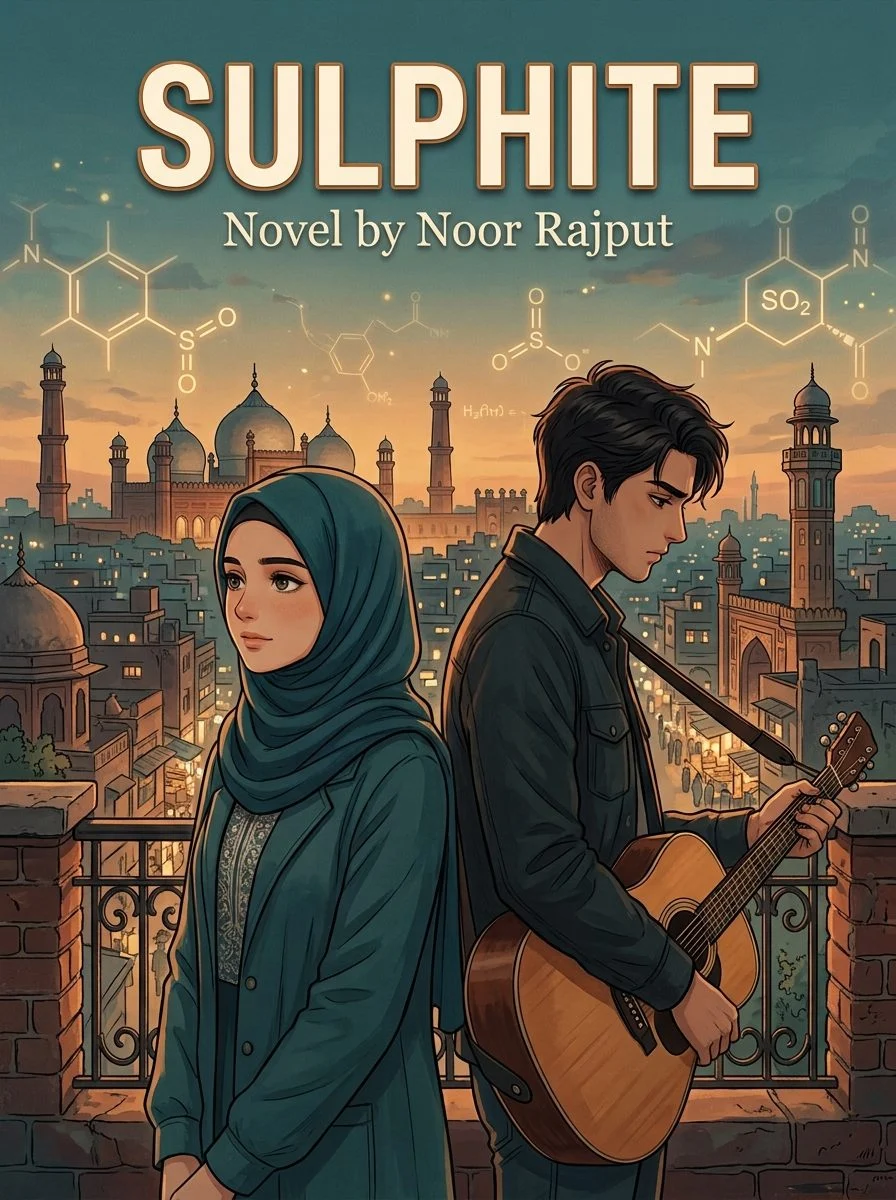
| Novel Name | Sulphite (سلفائیٹ) |
| Author | Noor Rajput |
| Language | Urdu |
| Genre | Islamic and Spiritual |
| PDF Page Count | 443 |
| PDF Available | Yes |
Sulphite Urdu novel by Noor Rajput. A stubborn musician who has stopped believing in anything and an orphan girl whose faith never wavers, tied together by a marriage neither of them chose. Start reading Sulphite here, or save the full PDF and come back to it.
Chemistry gave this novel its name, and it fits perfectly. Sulphites are compounds that refuse to behave like anything else, and so are the two people at the heart of Noor Rajput’s story. Often called a modern Peer-e-Kamil, Sulphite blends love, faith, and hard questions into one unforgettable read. Here’s the full story.
If the spiritual turn in Islamic and spiritual novels is what you look for, this sits closer to that shelf than to ordinary romance, and it goes somewhere much gentler than Amarbail does.
Quick Overview
Sulphite tells the story of two people from completely opposite worlds. Rohan Jabeel, known as RJ, is a wealthy, egotistical musician who has drifted away from faith and openly questions Islam. Ume Hanam, called Hani, is a poor but self-respecting orphan girl with a remarkably sharp mind, someone who loves her religion yet remains curious about its deeper truths. The title itself comes from a 1906 essay by Gelett Burgess, which split people into “bromides,” the predictable majority, and “sulphites,” the rare few who think originally for themselves. Both RJ and Hani are sulphites, and that shared rarity is what makes their collision so combustible.
Main Characters
- Rohan Jabeel (RJ): A rich, egotistical musician and questioning atheist whose spiritual awakening forms the heart of the novel.
- Ume Hanam (Hani): A poor, self-respecting orphan girl with a brilliant mind and deep faith, whose patience and character are what finally reach RJ.
Full Plot Summary
Their paths cross when Hani takes a short teaching job at a college to support herself financially. RJ, who has frozen his final university semester, sits in on her class just to pass the time, and what follows is a classic enemies-to-lovers arc. He makes her life difficult, testing her patience at every turn, and then, almost as a cruel joke, traps her into a nikah. Hani, after allowing herself a single day of tears, refuses to let it break her and carries on with her life with quiet dignity, a decision that quietly reshapes everything between them.
What begins as hostility slowly turns into something deeper as the two are forced to live with the consequences of that marriage. Much of the novel’s power comes from watching RJ’s internal conflict unfold. His arrogance, his spiritual emptiness, and his refusal to believe are gradually worn down, not by argument or pressure, but by Hani’s patience, her strength of character, and the quiet example she sets. The novel treats his journey toward faith with real care, showing that genuine belief comes from understanding and answered questions rather than fear or force.
Alongside the central romance runs a parallel thread exploring the journey of an atheist character toward accepting Islam, handled thoughtfully rather than preachily. The story does not shy away from pain. Hani’s struggle with poverty, her helplessness after the forced marriage, and the grief that follows tragedy all carry genuine emotional weight, with many readers admitting the novel moved them to tears more than once.
By its final chapters, Sulphite closes the circle it opened: RJ confronts his mistakes and is changed by Hani’s loyalty and endurance, and the story moves from hatred toward true love. It ends on an emotional yet hopeful note, where love triumphs despite injustice and suffering, and where faith, patience, and understanding turn even the hardest circumstances into something meaningful.
Central Themes
- Faith and Doubt: RJ’s journey from questioning atheism to belief anchors the entire story.
- Hate to Love: The forced marriage slowly turns hostility into genuine devotion.
- Patience and Sacrifice: Hani’s quiet endurance, not argument, becomes the force that changes everything.
- Uniqueness: The “sulphite” metaphor celebrates people who refuse to think like everyone else.
Why Readers Love Sulphite
- A Modern Peer-e-Kamil: Readers who loved Umera Ahmed’s classic find a fresh, new-generation echo here.
- Real Emotional Depth: Scenes of poverty, heartbreak, and grief hit hard and feel earned.
- Meaningful Substance: It blends romance with genuine spiritual and intellectual questions.
- Unforgettable Characters: RJ and Hani’s clashing personalities keep readers hooked to the last page.
Final Thoughts
Sulphite is more than a love story. It’s a journey through faith, doubt, and self-discovery wrapped in an emotionally charged romance. If you enjoy spiritual Urdu novels that make you feel and think in equal measure, this one earns its reputation.