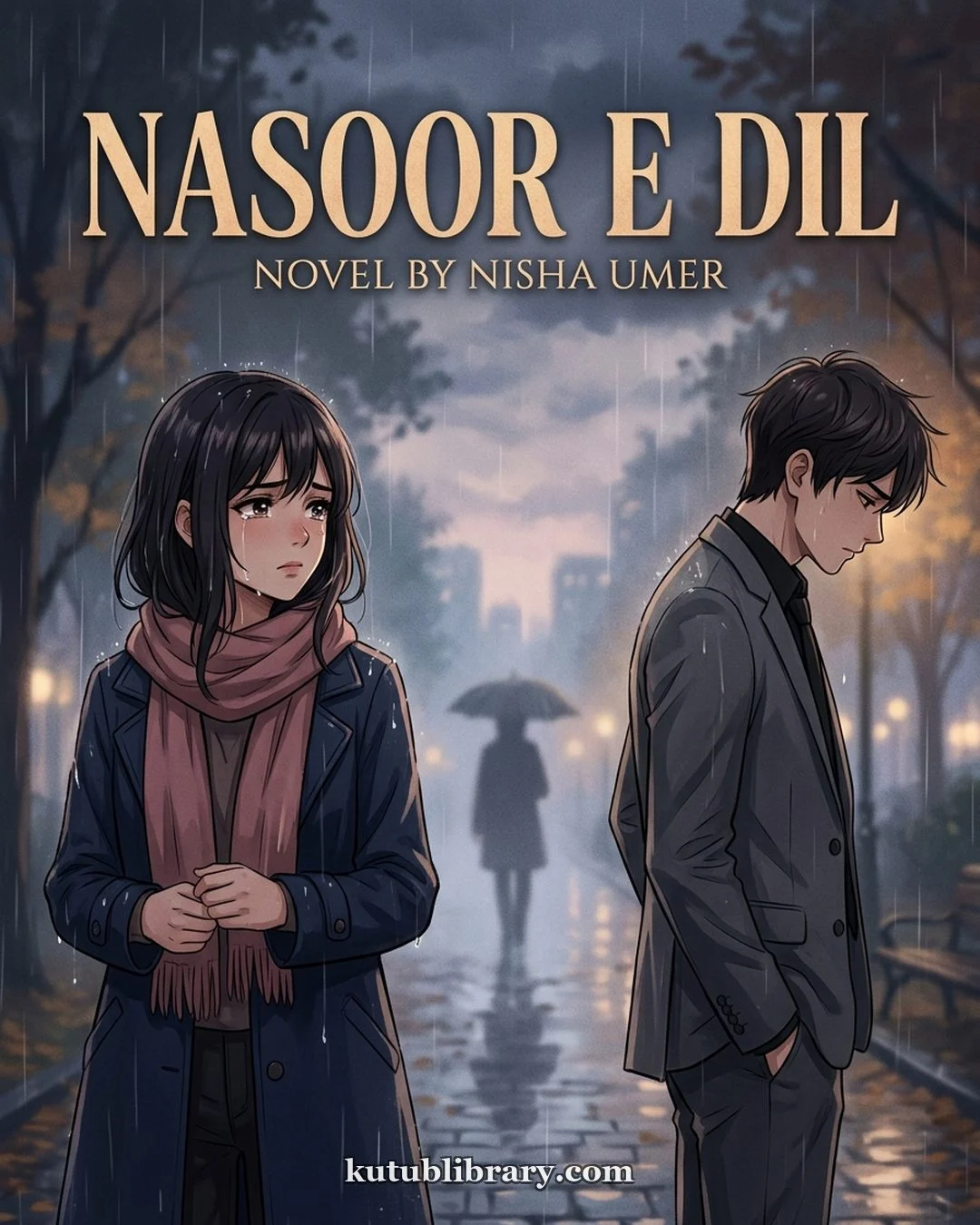
| Novel Name | Nasoor e Dil |
| Author | Nisha Umer |
| Language | Urdu |
| Genre | Forced Marriage |
| Theme | Broken Engagement, Forced Marriage, Love Triangle |
| Episodes | 40 |
| PDF Page Count | Episodic |
| PDF Available | Yes |
Nasoor e Dil Urdu novel by Nisha Umer. A broken engagement, a marriage signed like a contract, and three people paying for one man’s secrets. Read the whole story here or download the PDF.
Some wounds never fully close. That is the promise Nasoor e Dil makes from its title alone, and Nisha Umer delivers on it with an emotionally devastating story about what happens when love, ambition, and family pressure collide. Built around a broken engagement, a forced strategic marriage, and a love triangle that spirals into genuine tragedy, this novel cuts deeper than most in its genre because it refuses to let any character off easy. Every choice has a cost, and readers feel every one of them.
If you came here from Black Moon, this is the same author refusing to soften a hard ending, and it belongs with the heavier sad Urdu novels on the site.
Quick Overview
Nasoor e Dil is a 40-episode emotional Urdu novel by Nisha Umer built on one cruel decision: a father breaks his son’s engagement to buy the silence of a business rival. What follows is not a rivalry between two women but three people trapped inside a deal none of them made. Anzla carries the wound, Zaroon carries the guilt, and Hoor Ain carries a marriage she never asked for.
Main Characters
- Anzla: The heroine, a sincere and emotionally open young woman whose world falls apart when the man she loves is taken from her. Her pain is not the quiet, accepting kind but the raw, devastating type that changes who a person is at their core. Her journey through heartbreak, betrayal, and the slow fight to rebuild herself forms the emotional backbone of the entire novel.
- Zaroon Haider: The male lead, a man caught between genuine love and the weight of family obligation and personal ambition. His decision to choose his father’s demands over his relationship with Anzla is not painted as simple villainy but as a deeply conflicted choice that haunts him throughout the story.
- Salman Sahab: Zaroon’s father, a businessman whose crumbling empire drives him to destroy his own son’s happiness. His decision to break Zaroon and Anzla’s engagement is calculated and cold, motivated entirely by self-preservation and the need to protect dangerous business secrets.
- Hoor Ain: The daughter of Luqman Malik, brought into Zaroon’s life through a marriage arranged for strategic purposes rather than love. Her position in the story adds complexity rather than serving as a simple obstacle, as she too is a pawn in a game she did not choose to play.
- Luqman Malik: A powerful and influential rival businessman who possesses secrets about Salman Sahab’s business dealings. His hold over Zaroon’s family is the catalyst that sets the entire chain of events in motion.
Full Plot Summary
Nasoor e Dil opens with what feels like the beginning of a happy ending. Anzla and Zaroon Haider are deeply in love, engaged to be married, and seemingly on the path to a life together. Their chemistry is genuine, their bond is strong, and readers are given just enough time with their happiness to feel the full weight of what comes next. Because what comes next is not a misunderstanding or a rival lover in the traditional sense. It is something far more calculated and far harder to fight.
Zaroon’s father, Salman Sahab, is a man whose business empire is quietly falling apart. The details of his financial ruin are tied to secrets that, if exposed, could destroy the family entirely. Enter Luqman Malik, a rival businessman who holds those secrets and has the power to use them. Luqman’s price for silence is simple: he wants Zaroon to marry his daughter, Hoor Ain. It is not a request but an ultimatum, and Salman Sahab, with his back against the wall, agrees without consulting his son.
When Zaroon learns what his father has done, the novel enters its most painful stretch. He is not given the luxury of a clean choice. On one side is Anzla, the woman he loves, whose trust and future are entirely in his hands. On the other is his father, his family name, and a business disaster that could take everyone he loves down with it. Zaroon’s decision to go through with the marriage to Hoor Ain is the moment that defines the rest of the story, and Nisha Umer handles it with the kind of emotional honesty that makes the reader feel genuinely torn rather than simply angry at the character.
Anzla’s devastation after the broken engagement is not brushed over or resolved quickly. Nisha Umer gives her pain the space it deserves, showing how a betrayal of this magnitude does not just hurt in the moment but rewires a person’s ability to trust, to hope, and to believe that love means anything at all. Anzla’s arc is not about finding another man or getting revenge. It is about confronting the wound itself and deciding whether she will let it define the rest of her life.
Meanwhile, Zaroon’s marriage to Hoor Ain creates a new set of complications. Hoor Ain is not the villain readers might expect. She enters the marriage knowing the circumstances and carrying her own emotional burden, which makes the triangle feel less like a competition and more like three people trapped in a situation none of them created. Zaroon’s guilt over what he did to Anzla clashes constantly with the reality of his new life, creating tension that Nisha Umer sustains through the entire middle section of the novel.
The family dynamics add another layer of pressure. Salman Sahab’s secrets continue to threaten everything, Luqman Malik’s influence does not end with the wedding, and the cousins and extended family members who surround the main characters bring their own loyalties, grudges, and emotional stakes to the table. The novel uses these relationships not as filler but as active forces that shape every major plot turn.
As the story moves toward its conclusion, the consequences of every choice made in the first half come crashing down. Buried truths surface, confrontations that have been building for hundreds of pages finally erupt, and both Anzla and Zaroon are forced to face what their love actually cost them. The ending does not offer easy comfort but instead delivers the kind of emotional resolution that feels earned, one built on pain, growth, and the hard reality that some wounds leave permanent marks even after they begin to heal.
Central Themes
- Love vs Ambition: The central conflict of the novel, where genuine love is sacrificed at the altar of family business interests and social status.
- Broken Trust: Anzla’s journey explores what happens to a person when the one they trusted most chooses something else over them, and whether that trust can ever be rebuilt.
- Family Pressure and Obligation: Zaroon’s impossible choice between love and duty reflects the very real weight that family expectations place on individual happiness in South Asian culture.
- The Price of Silence: Salman Sahab’s hidden secrets drive the plot, showing how one person’s refusal to face the truth can destroy multiple lives around them.
- Emotional Wounds That Linger: The title itself, meaning the wound of the heart, runs through every character arc, emphasizing that some forms of pain do not heal cleanly.
- Marriage as a Transaction: Hoor Ain and Zaroon’s marriage is presented not as a love story but as a business deal, exposing how relationships can be reduced to tools of power.
Why Readers Love Nasoor e Dil
- Emotionally Devastating Plot: The broken engagement and its aftermath hit harder than most Urdu novels because the characters are given genuine depth before the tragedy strikes.
- No Easy Villains: Zaroon is not simply a bad person, Hoor Ain is not simply a rival, and even Salman Sahab’s actions come from desperation rather than malice, making the story feel real.
- Nisha Umer’s Emotional Honesty: Fans of Black Moon will recognize her refusal to sugarcoat difficult emotions or offer shortcuts to healing.
- A Heroine Who Earns Her Arc: Anzla’s journey from devastation to strength is not glossed over but built slowly and convincingly across the full length of the novel.
- Strong Suspense Elements: The business secrets, Luqman Malik’s grip on the family, and the slowly unraveling family dynamics keep the plot tense beyond just the romance.
- Long, Immersive Read: With 40 episodes and thousands of pages, the novel gives every character and every emotional beat the space it needs to land properly.
Final Thoughts
Nasoor e Dil earns its place as one of Nisha Umer’s most talked about novels because it treats heartbreak as something serious rather than something decorative. The love triangle at its center is not about competition but about consequence, and every character pays a real price for the choices they make. Anzla’s pain, Zaroon’s guilt, and the quiet devastation of Hoor Ain’s position create a story that lingers long after the reading is done. If you are looking for an emotionally intense Urdu novel that explores the real cost of broken promises, family pressure, and love that survives even when it probably should not, Nasoor e Dil is exactly that read.