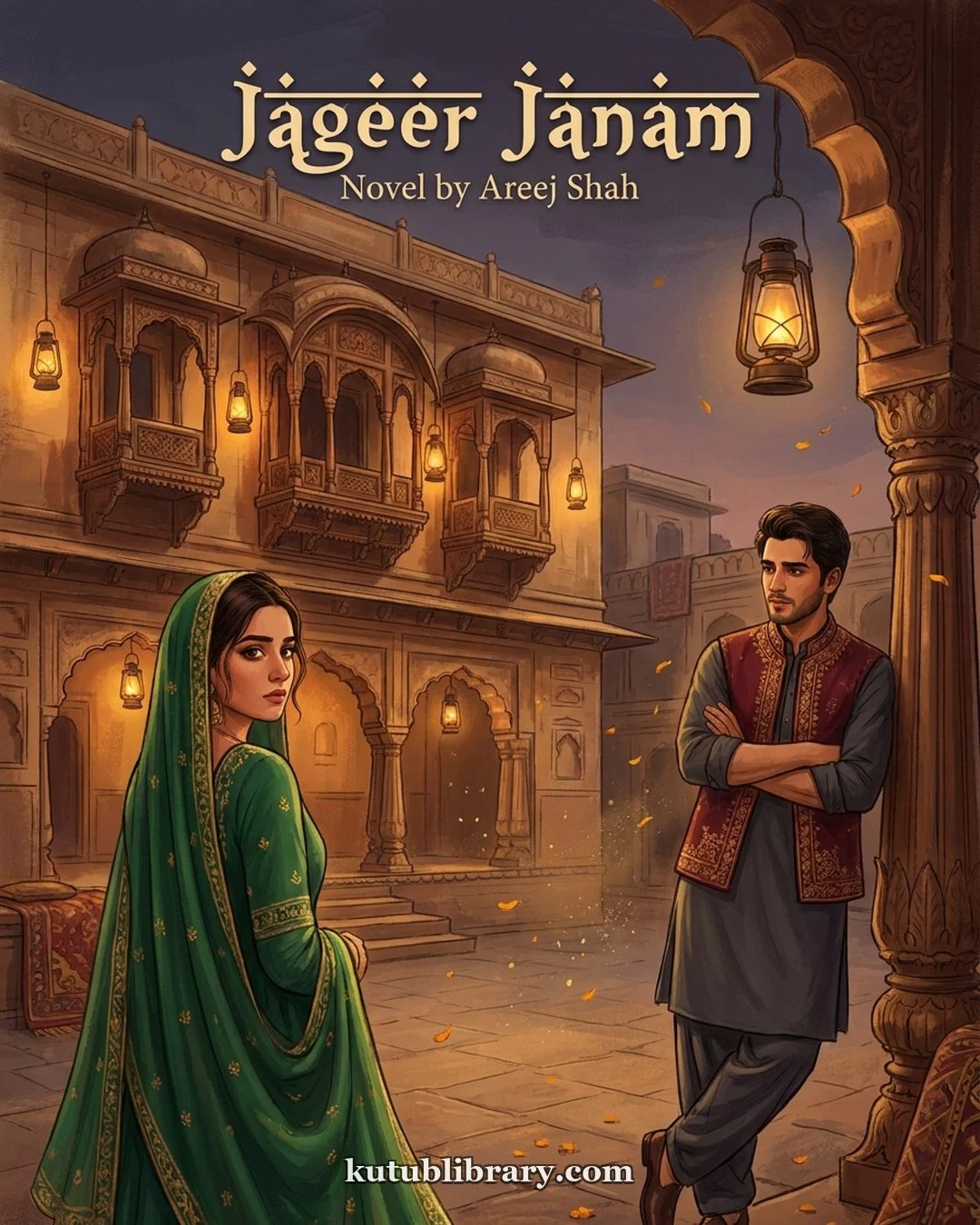
| Novel Name | Jageer Janam |
| Author | Areej Shah |
| Language | Urdu |
| Genre | Forced Marriage |
| Theme | Power and Possession, Redemption, Family Feuds |
| PDF Page Count | 1,272 |
| PDF Available | Yes |
Jageer Janam Urdu novel by Areej Shah. Two parallel love stories inside one feudal household where wealth decides who controls whom. Read the complete novel here or take the PDF with you.
Feudal estates, unchecked pride, and a love that refuses to follow the rules of power. Jageer Janam by Areej Shah drops readers into a world where wealth decides who controls whom, and where hearts become battlegrounds between desire and family loyalty. This novel runs two parallel love stories through the veins of a jagirdari household, each one testing how far a man will go when obsession and genuine affection collide.
The feudal power struggle here pairs well with The Panther Mafia War, and the rest of these sit under forced marriage based novels.
Quick Overview
Jageer Janam is a feudal romance Urdu novel by Areej Shah running two love stories side by side inside one jagirdari household. Kabir, a reckless heir, must earn the respect of a woman who sees through his charm, while Dilawar returns from abroad determined to marry against his family’s wishes. Both threads test what it costs to shed the privilege and pride that power has built into them.
Main Characters
- Kabir: A reckless university student from a feudal family who lives without accountability. He drinks, manipulates women, and treats relationships like a game. His entire worldview shifts when he encounters someone who refuses to fall for his tactics, forcing him to confront who he really is beneath the arrogance.
- Hoor ul Ain: A kind, modest, and deeply principled young woman who lives with her uncle after losing her parents. Her purity and self-respect stand in sharp contrast to Kabir’s lifestyle, and her refusal to be impressed by his charm becomes the catalyst for his change.
- Dilawar: The son of feudal lord Sikandar Shah, carrying years of bitterness after his father’s remarriage. He returns from America with unresolved anger and a single-minded determination to marry the woman he has chosen, regardless of the family rivalry standing in his way.
- Eesham: Dilawar’s aunt’s daughter and the object of his determination. Caught between two feuding sides of the same family, her position in the story adds tension and emotional weight to Dilawar’s already complicated journey.
- Sikandar Shah: The feudal patriarch whose decisions and remarriage set many of the novel’s conflicts into motion. His power over the estate and the people within it creates the framework against which every character’s story unfolds.
Full Plot Summary
The novel opens by establishing the world of a powerful feudal household where wealth and authority shape every relationship. At the center sits Sikandar Shah, a jagirdar whose influence extends beyond land and into the personal lives of everyone connected to his family. His decisions, particularly his remarriage, have fractured family bonds and set the stage for the conflicts that drive the story forward.
The first narrative thread follows Kabir, a young man who has grown up with the worst habits privilege can produce. He moves through university life treating women as conquests, pretending affection only to discard people once he gets bored. His pattern breaks completely when he crosses paths with Hoor ul Ain. She is everything he is not, sincere, modest, and completely uninterested in his games. Where other women fell for his charm, Hoor sees through it and walks away without a second thought. This rejection ignites something in Kabir that goes beyond his usual desire to win.
The second narrative centers on Dilawar, who returns from years abroad carrying deep resentment toward his father. Sikandar Shah’s remarriage wounded Dilawar in ways he has never fully processed, and his return is fueled by a need to reclaim control over his own life. That control takes the form of his determination to marry Eesham, his aunt’s daughter. The problem is that their families stand on opposite sides of a bitter feud, and his desire to bridge that gap through marriage only deepens the existing tensions.
Areej Shah weaves these two storylines together through the shared backdrop of the feudal estate, where every personal choice carries political weight. The jagirdari system serves not just as a setting but as an active force in the story, shaping how characters relate to each other and how love is expressed, demanded, or denied. Possessiveness runs through both narratives, but the novel is careful to show where it crosses the line from protection into control.
As both stories move toward their conclusions, the characters are forced to shed the versions of themselves that power and privilege built. Kabir must abandon his manipulative instincts to earn something real, and Dilawar must decide whether his bitterness toward his father is worth sacrificing his own chance at happiness. The resolution does not come easily for either pair, which makes the emotional payoff feel genuine rather than rushed.
Central Themes
- Power and Possession: The feudal system in the novel mirrors how love itself can become a form of ownership when unchecked by respect and understanding.
- Redemption Through Love: Kabir’s arc traces how encountering genuine goodness in another person can force a reckless individual to confront and change their destructive patterns.
- Family Feuds: The rivalry between branches of the same family creates obstacles that go beyond personal disagreements and into deep-rooted generational conflict.
- Pride and Stubbornness: Both male leads carry pride that simultaneously defines and limits them, and the novel explores what it costs to let that pride go.
- Class and Society: The jagirdari setting highlights how wealth and social standing dictate romantic choices and personal freedom in ways that still resonate today.
Why Readers Love Jageer Janam
- Dual Storyline Structure: Running two love stories in parallel keeps the pacing dynamic and gives readers double the emotional investment. Each storyline has its own tone and tension, which prevents the novel from ever feeling repetitive.
- Complex Male Leads: Both Kabir and Dilawar are flawed in distinct ways, and watching them struggle with their own worst qualities adds depth that simple hero archetypes cannot deliver. Readers appreciate characters who earn their growth rather than receiving it for free.
- Feudal World-Building: Areej Shah paints the jagirdari setting with enough detail and authenticity to make the power dynamics feel real. The estate is not just a backdrop but a living force in the story that shapes every relationship.
- Strong Female Characters: Hoor ul Ain’s refusal to compromise her values, even when facing pressure from a powerful family, makes her a standout heroine. Her strength is rooted in character rather than confrontation, which readers find refreshing and inspiring.
- Areej Shah’s Storytelling: The author has a skill for building tension slowly and releasing it at exactly the right moments. Her dialogue feels sharp and natural, and her ability to handle multiple storylines without losing focus shows real command over her craft.
Final Thoughts
Jageer Janam is a novel that understands the weight of the world it builds. Areej Shah has crafted a feudal romance where love is never free from the influence of power, pride, and family obligation. The dual storylines give the novel a richness that keeps readers engaged across its 1,272 pages, and the emotional journeys of Kabir, Hoor ul Ain, Dilawar, and Eesham feel distinct enough to stand on their own while connecting beautifully through the shared setting.