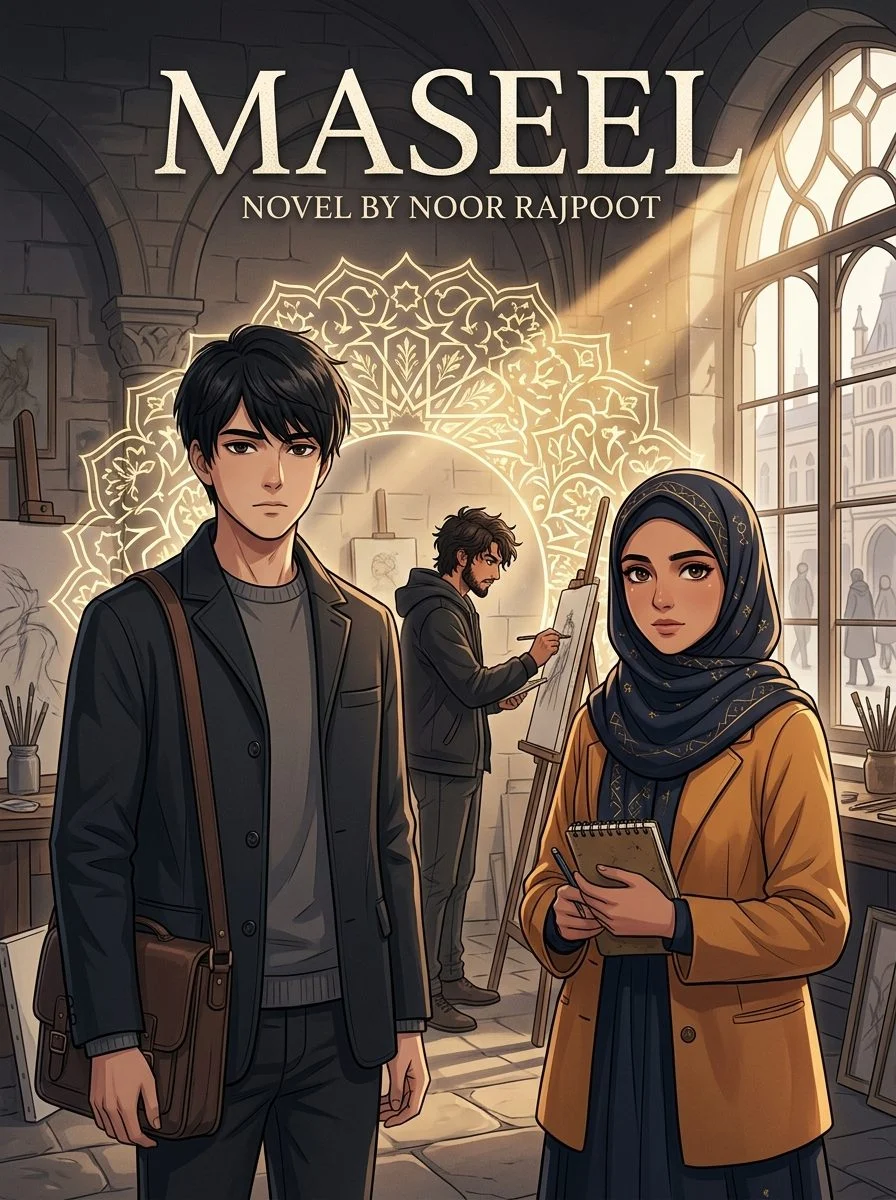
| Novel Name | Maseel (میسیل) |
| Author | Noor Rajpoot |
| Language | Urdu |
| Genre | Islamic and Spiritual |
| Series | Sequel to Sulphite |
| PDF Page Count | 2,820 |
| PDF Available | Yes |
Maseel Urdu novel by Noor Rajpoot. The Sulphite story handed to the next generation, with Rohan Jabeel’s son and a girl her own family treats as bad luck. Read the sequel here, PDF included.
Some legacies do not end, they continue. Maseel picks up the world Noor Rajpoot built in Sulphite and hands it to the next generation, giving readers Rohan Jabeel’s son and a girl her own family called bad luck. Faith, doubt, art, and old wounds collide across London and Pakistan. Here’s the full story.
Quick Overview
Maseel is the powerful second installment in Noor Rajpoot’s Sulphite series, continuing its exploration of inner conflict, belief, and emotional change. While the themes remain consistent with the first book, Maseel presents a fresh narrative with new characters and settings, blending mystery, Islamic teachings, romance, and psychological depth. Readers who loved Sulphite describe this sequel not merely as a continuation but as a book that honours the original, with many saying Noor Rajpoot’s growth as a writer shows on every page.
Main Characters
- Haad Jabeel: The male lead and son of Rohan Jabeel from Sulphite. He carries his father’s name, his faith, and somehow an even heavier burden. Readers overwhelmingly name him their favourite character in the book.
- Umm e Eman (Emaan): The heroine, a girl her own family considered bad luck. A hijabi and spiritually insightful writer, she is written with such care that readers feel every wound she carries without a word being wasted.
- Abdul: A fiery, restless character whose journey through longing, sibling rivalry, and self-discovery forms one of the novel’s strongest emotional threads, standing in sharp contrast to the calmer figures around him.
- Maseel: The title figure, a once-devout Muslim turned atheist, now a renowned sculptor heading a prestigious art institute in London. His hatred of religion drives the novel’s central ideological conflict.
Full Plot Summary
The novel’s ideological heart belongs to Maseel himself, a man who was once a devout Muslim before deep personal and philosophical struggles turned him toward atheism. Now a celebrated sculptor and the head of a prestigious art institute in London, his painful past has hardened into open hostility toward religion, and toward Islam in particular, to the point that he bans Muslim students from his institute. Yet he remains haunted by unanswered questions about existence and meaning, and everything begins to shift when he stumbles across the writings of Emaan, a spiritually insightful columnist whose words reach him where argument never could.
Alongside this runs the story readers came for. Haad Jabeel, son of Rohan Jabeel from Sulphite, carries his father’s name and faith along with a burden that feels even heavier than RJ’s ever was. Bound to Umm e Eman through a contract marriage, he keeps his fears and vulnerable past hidden behind a stoic expression, letting almost nothing show. Umm e Eman, dismissed by her own family as bad luck, brings a quiet spiritual strength that slowly reaches him, and their relationship becomes the emotional centre around which everything else turns.
Abdul provides the novel’s fiercest counterpoint. Restless and fiery where others are composed, his arc moves through longing, sibling rivalry, and self-discovery as he wrestles with the burdens of his past. Through him, Noor Rajpoot examines the importance of balanced parental love and the lasting impact of childhood experience on personality, giving the book a psychological dimension that lifts it well beyond a standard sequel. University life, family dynamics, and long-buried secrets fill out the world around these characters.
By the end, Maseel delivers exactly what its readers hoped for and warned each other about: a novel that breaks your heart and rebuilds it. It weaves faith, emotional healing, and personal rediscovery through an engaging mix of suspense and Islamic knowledge, showing that guidance can reach even the most hardened disbeliever and that healing is possible for those carrying the heaviest wounds. Readers consistently advise starting with Sulphite first, then letting Maseel do its work.
Central Themes
- Faith and Atheism: The novel’s core conflict is a hardened disbeliever confronting truth.
- Legacy: Haad carries his father’s name, faith, and an even heavier burden.
- Family and Childhood: Abdul’s arc explores how imbalanced parental love shapes a person.
- Healing: Every major character is working through wounds that predate the story.
Why Readers Love Maseel
- Haad Jabeel: Readers call him the standard, and openly adore him.
- A Worthy Sequel: It honours Sulphite rather than simply extending it.
- Umm e Eman’s Writing: Her pain is conveyed with remarkable restraint and beauty.
- Intellectual Depth: Islamic knowledge and philosophy woven into genuine storytelling.
Final Thoughts
Maseel is emotional, intelligent, and genuinely devastating, a sequel that lives up to a beloved original. With its ideological conflict between faith and denial, its unforgettable hero, its wounded heroine, and Abdul’s fiery journey alongside them, it delivers everything Sulphite readers wanted and more. Read Sulphite first, then let Maseel break your heart, exactly as its readers keep advising.
Read Sulphite first if you have not, because this one picks up its people and its arguments directly. Both belong on the Islamic and spiritual novels shelf.