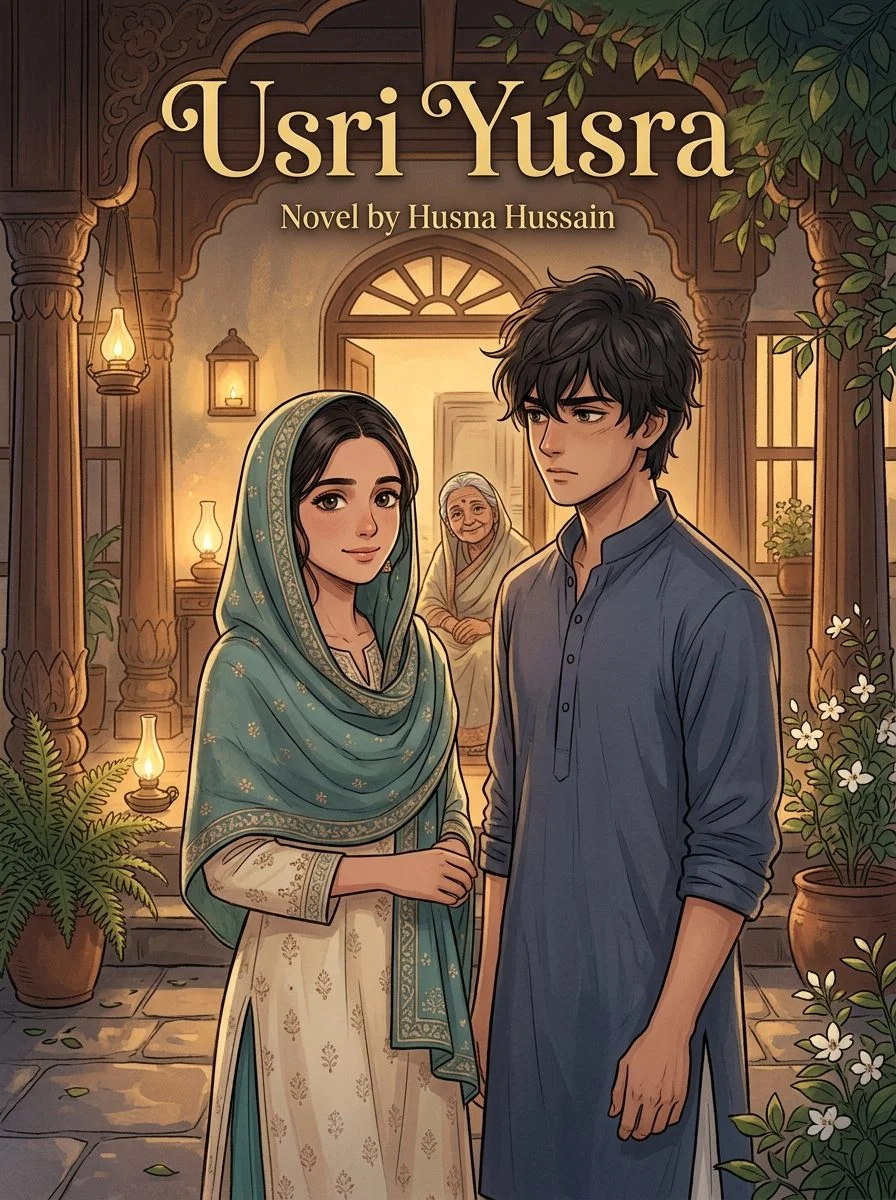
| Novel Name | Usri Yusra (عسر یسریٰ) |
| Author | Husna Hussain |
| Language | Urdu |
| Genre | Islamic and Spiritual |
| Theme | Ease After Hardship |
| PDF Page Count | 1,420 |
| PDF Available | Yes |
Usri Yusra Urdu novel by Husna Hussain. Two people thrown out by their own families and pushed into a marriage neither one chose, built on the promise that ease follows hardship. Free here with the PDF.
The title comes straight from the Quran: with hardship comes ease. Husna Hussain builds an entire novel around that promise, placing two people disowned by their own families inside a marriage neither of them chose. Long, emotional, and fiercely debated among readers, Usri Yusra is one of the most talked-about Urdu novels of recent years. Here’s the full story.
Readers who wanted more of the faith running under Sulphite will find it front and centre in this one.
Quick Overview
Usri Yusra is an emotionally powerful Urdu novel by Husna Hussain, inspired by the Quranic verse “Inna ma’al usri yusra,” meaning indeed, with hardship comes ease. Published in episodic form in a monthly digest, it drew enormous reader attention and has since become one of the most discussed contemporary Urdu novels. It weaves together love, psychological trauma, family conflict, spirituality, and emotional healing, wrapped in the story of two people the world has already discarded.
Main Characters
- Faris Wajdan Sherazi: The male lead, a man made emotionally distant and cold by deep childhood trauma. Harsh and difficult for much of the novel, his own point of view later reframes everything readers thought they knew about him.
- Jannat Kamal: The heroine, a symbol of faith and resilience. Heartbroken yet hopeful, she chooses to build her marriage with patience and love despite Faris’s indifference, and her endurance becomes the story’s beating heart.
- Jamila Dawood: A deeply loved supporting character who protects and cares for a child who is not her own, embodying selfless love. Mrs.
- Sherazi: A wise, disabled grandmother whose compassion and spiritual insight guide both leads through their hardest moments. Dr. Mustafa, Zaid, Rahim and Aazam Shehrazi: Memorable supporting figures ranging from a pillar of positivity to comic relief to a strict but occasionally kind family head.
Full Plot Summary
At its centre are Faris Wajdan Sherazi and Jannat Kamal, two characters who share a painful common ground: both have been disowned and hurt by their own families. Life has already given each of them rejection and pain, and their married life at first seems set to continue the pattern. Fate brings them together through a forced arranged marriage that Faris never wanted, and neither of them fully understands how they ended up bound to each other or what that bond will eventually become.
Faris is emotionally distant, cold, and often harsh, his behaviour rooted in a childhood trauma the novel gradually unpacks. Jannat, heartbroken yet hopeful, makes a deliberate choice: rather than meet coldness with coldness, she decides to build the marriage with patience and love. Her unwavering effort, alongside the compassion and spiritual insight of Mrs. Sherazi, slowly begins to reach the wounded parts of Faris that no one else has touched. Their banter along the way has become iconic among readers, giving the heavy story genuine warmth and humour.
The novel is unusually long yet rarely feels slow, largely because Husna Hussain gives real weight to every character’s past. Supporting figures like Jamila Dawood, who loves and protects a child not her own, and Dr. Mustafa, a steady source of positivity, add emotional layers throughout, while the theme of what goes around comes around plays out across the wider cast. It is worth noting that the novel has also drawn serious criticism online, with many readers arguing that Faris’s harsh treatment of Jannat is romanticised rather than condemned. Others counter that his later point of view reframes his behaviour and that the book’s message is more complicated than a simple reading allows, a debate that has followed the novel ever since its release.
By the end, Usri Yusra delivers exactly what its title promises. It is a spiritually uplifting and emotionally rich journey about resilience, faith, and healing, showing how patience and sincere love can reshape even the most wounded soul. Heartwarming and traumatic in equal measure, it remains a must-read for fans of socially conscious, healing Urdu fiction, and one readers continue to argue about long after finishing it.
Central Themes
- Ease After Hardship: The Quranic verse behind the title shapes the whole narrative.
- Childhood Trauma: Faris’s coldness is traced back to deep, unhealed wounds.
- Faith and Patience: Jannat’s endurance and trust in Allah drive her change of the marriage.
- Family Rejection: Both leads carry the pain of being disowned by their own people.
Why Readers Love Usri Yusra
- Iconic Banter: Faris and Jannat’s exchanges are humorous and endlessly quoted.
- A Rich Supporting Cast: Jamila Dawood, Mrs. Sherazi, Zaid and Dr. Mustafa all stand out.
- Long Without Being Boring: Readers praise its length as immersive rather than dragging.
- A Spiritual Core: Its message of hope after hardship resonates far beyond the romance.
Final Thoughts
Usri Yusra is emotional, spiritually rich, and genuinely divisive, which is part of why it remains so widely read. With its wounded hero, resilient heroine, unforgettable supporting cast, and a message drawn straight from the Quran, it offers both heartbreak and hope. If you enjoy long, socially conscious Urdu fiction about trauma, faith, and healing, and you do not mind a story that has sparked real debate, this Husna Hussain novel is well worth reading.